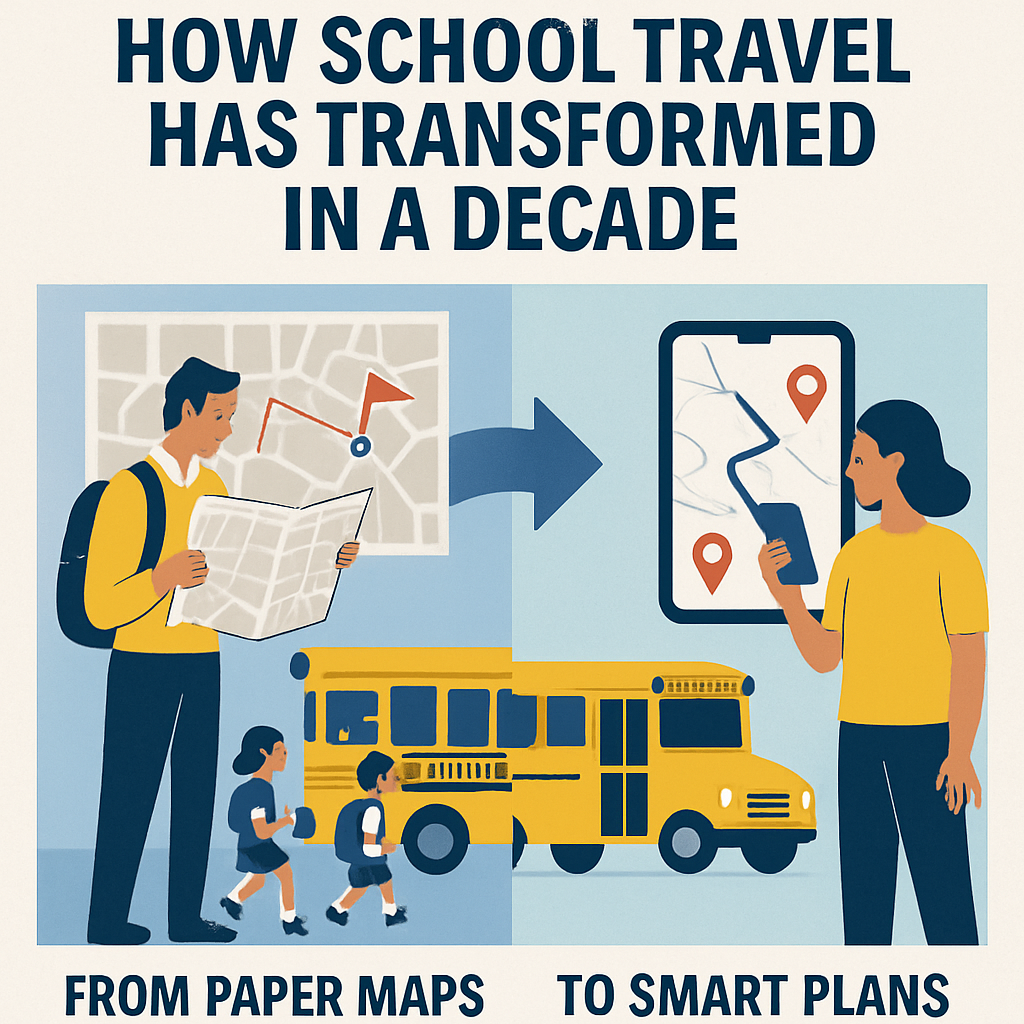
10 years ago, organising a school trip abroad meant piles of paperwork, endless emails and printed itineraries tucked into ring binders. Today, it’s a completely different world. Technology, global awareness and post-pandemic flexibility have transformed how teachers plan and lead Erasmus+ and Turing Scheme mobilities. Schools aren’t just booking transport and accommodation anymore, they’re managing digital safety, sustainability goals, intercultural preparation and wellbeing. The travel experience has evolved from logistics to learning design. Here’s how educational travel has changed and what it means for the next generation of school mobility planners.
1. Digital Planning Has Replaced Paperwork
In 2016, trip coordination meant chasing signatures, stamping documents and faxing consent forms. In 2026, most of this happens online.
Digital platforms now store travel insurance, health forms and emergency contacts securely in one place. Communication between schools, partners and parents is instant, with mobile apps replacing traditional print itineraries.
What this means for teachers is less time on administration and more time focusing on student experience.
Tip: Choose tools that allow live updates, so families and coordinators stay informed in real time.
2. Safety and Health Are Smarter and Stronger
After the pandemic of 2020, safety protocols became a core part of every trip plan. Schools now integrate digital medical forms, real-time alerts, and direct contact with emergency services abroad. Risk assessments have evolved too, now including cyber safety, environmental risks, and accessibility considerations.
Students are also more aware of their own health needs. Leaders focus not just on physical safety but also on emotional wellbeing, ensuring support networks are in place before departure.
Tip: Include a short digital-safety session before travelling, students today live half their experiences online.
3. SustainabilityIs at the Heart of Planning
Environmental awareness has completely reshaped mobility design. Schools are now expected to justify the impact of their travel choices.
From selecting eco-friendly accommodation to encouraging train travel and digital documents, every small action contributes to a greener Erasmus+ experience. Many schools now build sustainability lessons into their trips encouraging reflection on carbon footprints and responsible tourism.
Tip: Choose local experiences over long transfers, they teach more about culture and reduce emissions.
4. Inclusion and Accessibility Drive Every Trip
Travel today is for everyone. Erasmus+ and Turing programmes have made inclusion central to mobility planning, ensuring students of all abilities, backgrounds and learning needs can take part. From accessible transport to gender-inclusive accommodations and adaptive learning activities, school groups now represent true diversity.
Teachers no longer ask, “Who can go?” but “How can we make it possible for everyone?”
Tip: Involve students in planning early, their input helps identify barriers you might not see.
5. Flexibility and Contingency Planning
The fast-changing world demands adaptable itineraries. Weather, strikes, or sudden restrictions can alter plans overnight, but schools have learned to pivot quickly.
Virtual briefings, cloud storage and hybrid project design means a trip doesn’t stop if something changes. Students might join an online workshop one day and a cultural visit the next.
Tip: Always keep a “Plan B” activity that adds value such as reflection workshops, local visits, or team-building games.
6. Learning Comes First
Perhaps the biggest transformation is philosophical. 10 years ago, trips were often seen as an extra activity. Now, Erasmus+ and Turing mobilities are viewed as essential parts of education.
Every element, from pre-departure preparation to post-return reflection, connects to skills like communication, digital literacy and intercultural understanding. The result is that travel is no longer just a reward. It’s an extension of the classroom, designed to teach resilience and global awareness.
Tip: Encourage students to document their learning, journals, photos, or small presentations turn experiences into measurable outcomes.
Erasmus+ and Turing FAQs
Q: What’s the biggest difference in planning now versus 10 years ago?
A: Mobility planning has become more digital, inclusive and education-focused. Teachers now use apps and online platforms instead of paperwork.
Q: How can schools adapt to fast change?
A: Build flexibility into every plan, digital copies of documents, virtual options for learning and strong communication channels.
Q: What new skills do teachers need today?
A: Digital competence, intercultural communication, and risk management are now essential.
To Conclude
Thanks to modern technology, the future of school travel is smarter, safer and more meaningful. Technology, inclusion and sustainability are no longer optional, they’re part of how students learn about the world.
Partner with TravelEdventures to plan innovative, flexible Erasmus+ and Turing mobilities that prepare schools and students for the next decade of global learning.

Comments: